
Healthcare professionals have busy schedules that often do not allow for hour-long trainings or webinars. These traditional training methods also fail to provide clear insights into where learners have gaps in their knowledge or understanding about certain topics.
Online, on-demand, interactive microlearnings address both these issues.
During a recent webinar, “Interactive Learning for Healthcare: Lessons from Mountain Pacific and Alaska Division of Public Health,” Mountain Pacific’s Crystal Morse, state service manager, joined infection prevention partners Kelley O’Leary and Rebecca Hamel to share how interactive learning tools can build engaging, accessible and measurable educational experiences.
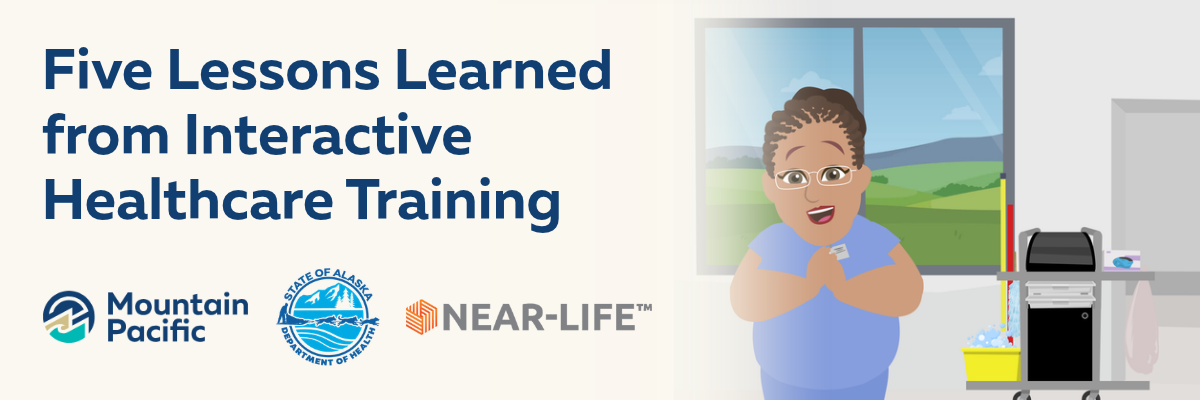
During the COVID-19 pandemic, Mountain Pacific and the Alaska Division of Public Health partnered on Project Firstline, a national initiative from the Centers for Disease Control and Prevention (CDC). Working together, we turned existing infection prevention resources into short, interactive trainings led by “Donna.” By combining animated video, scenario-based learning and real-time feedback, the trainings help learners build their knowledge, but they also identify specific areas where trainees need additional support.
The webinar, hosted by Near-Life, one of the online software applications used to create the trainings, highlighted five key takeaways from the project:
Want to learn more about the project and how interactive training supported infection prevention in healthcare? Watch the recorded webinar.
Explore Mountain Pacific’s “Donna” infection prevention training series:
These short, interactive trainings provide practical, evidence-based infection prevention education designed specifically for healthcare professionals and frontline staff.




No Current Comments